
For Cruise Lines International Association (CLIA) and its Cruise Line Members, the safety of guests and crew is the highest priority and is fundamental to their operations. Even with an increase in cruise capacity, cruise lines have maintained an exceptional safety record – making cruising one of the safest ways to travel. In fact, cruise travel is safer than virtually every other form of travel.
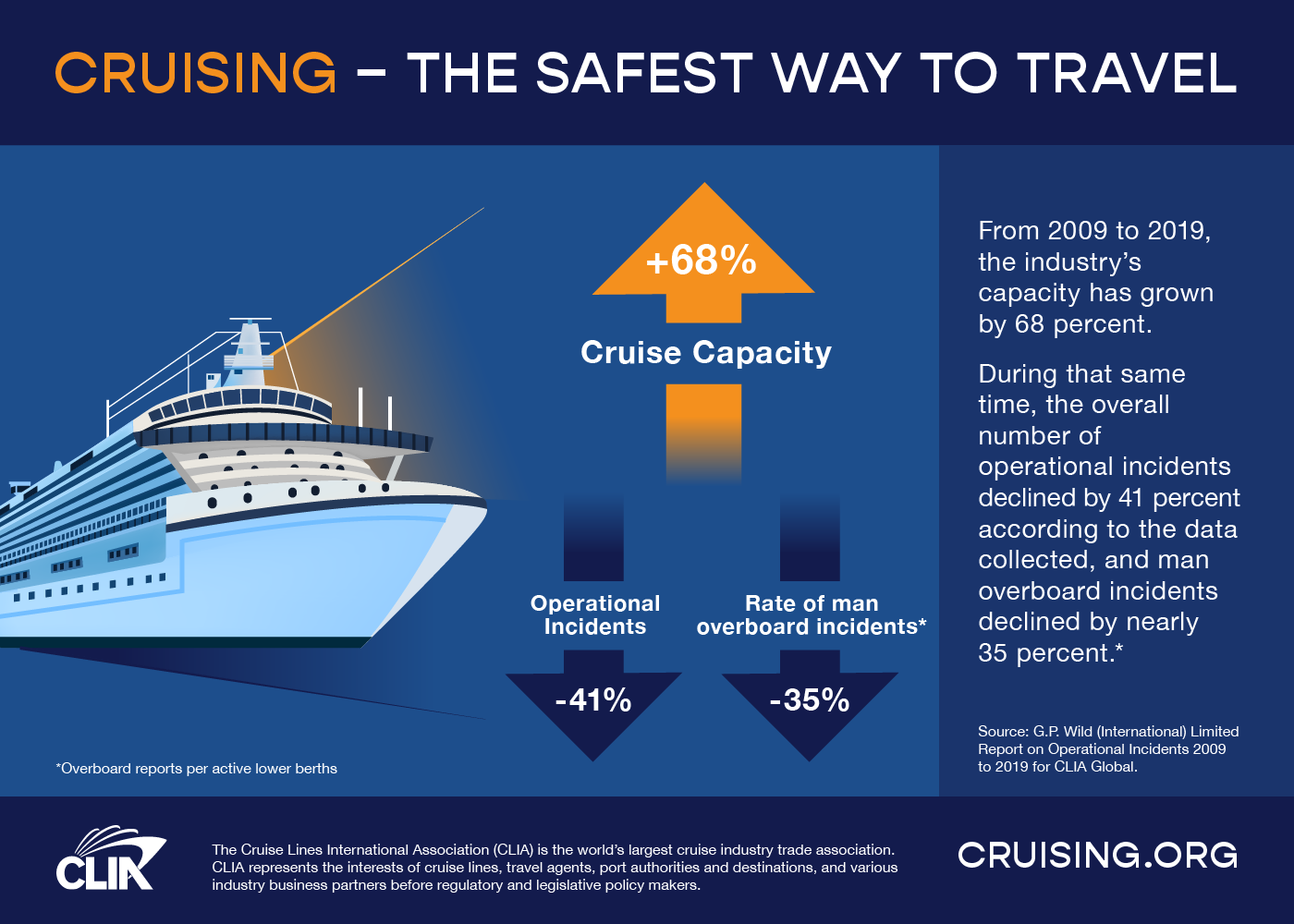
A study by GP Wild analysing cruise ship operational incidents shows that while worldwide cruise ship capacity grew by more than 55 percent from 2009 to 2018, over that same period the number of operational incidents has trended down 37 percent, making cruise lines' safety record ahead of other modes of leisure transportation.
Ensuring Security at Sea
- Cremember Training: Crewmembers receive robust training in safety, security and first aid to prevent and respond to potential emergency situations.
- Heavily Scrutiny: Cruise ships are among the most scrutinised vessels at sea. With oversight beginning at design and construction, the International Maritime Organisation (IMO), flag and port state authorities, and classification societies provide strict safety standards and oversight throughout a ship's operations.
- Constant Improvement: CLIA and its Cruise Line Members constantly work to improve safety by reviewing operational procedures to improve safety processes and technology. With new policies implemented and continual meetings with an Independent Panel of Experts comprised of top maritime and transportation professions to provide advice on measures to enhance safety, the cruise industry is always looking to improve.
- Precuations: Every cruise ship must be equipped with enough survival craft, including life boats and life rafts, to accommodate at least 125 percent of the number of persons on board. In addition, all survival craft must be tested and meet rigorous international guidelines.
Cruise ships today are the safest that have ever sailed, thanks to the rules, regulations, and technological innovations that govern their design.
.jpg)
Cruise ships are one of the safest vacation options in the world, with rates of serious crimes that are exceedingly lower than those on land. Data from the FBI supports this fact, and due to multiple layers of security, allegations of major crimes on cruise ships are extremely rare.
Ensuring Security at Sea
- Comprehensive Security: The cruise industry follows comprehensive security protocols, both prior to departure and at sea. Passengers, crew, and baggage must pass through rigorous security checkpoints before boarding. In addition to video surveillance and around-the-clock onboard emergency contacts, cruise ships keep an official manifest that lists everyone onboard. Proof of identity is required to access a cruise ship, and only crew, ticketed passengers, and those on a pre-approved list may enter.
- Highly Trained Security Personnel: Exceptionally trained ship security personnel are on call 24/7. Major cruise lines have sophisticated security departments run by former federal, state and military law enforcement officials and are staffed by competent, qualified security personnel.
- Transparency in Crime Reporting: The cruise industry is deeply committed to transparency in crime reporting. Cruise Lines International Association (CLIA) Cruise Line's voluntarily report any serious crime allegation involving an American on oceangoing voyages worldwide, regardless of the ship's location and flag. For alleged crimes involving foreign citizens outside of U.S. waters, the victim's home country has the full authority to investigate, as well as local law enforcement and the country where the ship is registered.
- Sample Prohibited Items List: The Sample Prohibited Items List includes items that the security professionals of CLIA's members have identified as potentially being dangerous or posing a risk to the crew, passengers or ship. Possession by passengers or crew of these items is generally not permissible without a valid reason, unless required in direct support of ship operations, as part of a crew member's official duties, and with the consent of a duly authorised ship representative. Sample Prohibited Items List PDF.